On Third Spaces, WhatsApp Groups, and the Lusaka Club You Never Joined
The Lusaka365 Insider on the slow disappearance of the third space. And what we lose if we don't show up.
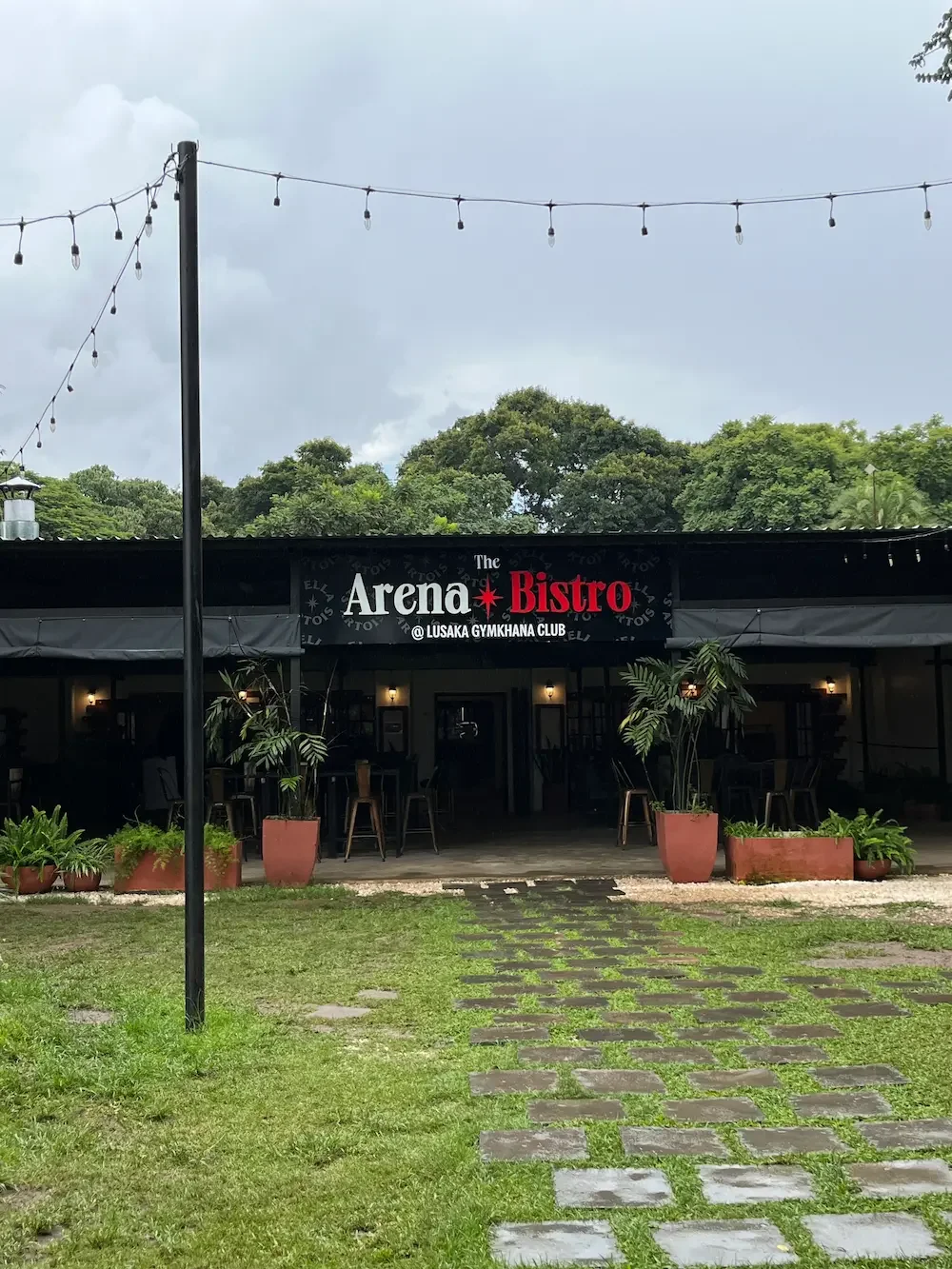
The new Arena Bistro at Lusaka Gymkhana Club
I am sitting at the Arena Bistro at Lusaka Gymkhana Club, at the Showgrounds, and I am the only one here. This turns out to be ideal. There is a gigantic television on the wall. Below it, a row of shisha pipes sitting on a shelf — deliberately placed, for a specific crowd, because the renovation knew exactly who it was courting. With no crowd to navigate, I can actually look. And there is a lot to look at.
On the walls: signs, photographs, the old Lusaka benches — solid and unhurried, the kind that are probably not made anymore — still exactly where they have always been. And in a glass case: trophies. Old ones. The kind with the little figurines on top and the engraved plates listing names and years going back further than most people currently alive in this city. Someone's score, someone's effort, someone's commitment to something that was never a KPI. All of it, kept.
I want to be clear: I am not mourning. The old Gymkhana was, if we are being honest, run down. A well-loved space that had been loved slightly past the point of comfort. What it has become is genuinely good. But I keep looking at the trophies. And I keep thinking about what it means that whoever renovated this place made a deliberate decision to leave them exactly where they were. They could have cleared the walls, started fresh, made it look like any other new spot in the city. They did not. The history stayed. And because the history stayed, this does not feel like just another place to get a drink. It feels like somewhere. That difference is what this piece is about.
It is also about the fact that most of us do not have this. And we have not noticed how much we need it.
The Space You Did Not Know You Needed
The sociologist Ray Oldenburg coined the term in his 1989 book The Great Good Place. Your first space is home. Your second is work — the place you spend most of your waking hours pretending to be more organised than you are. Your third is everything else: the bar you go to without an occasion, the club where they know your drink order, the Sunday spot where you see the same faces and that sameness is the whole point. Oldenburg argued that the third is the one most easily sacrificed and least easily replaced. He wrote this before WhatsApp existed, which shows admirable foresight.
What makes a third space distinct is the social contract it carries. It is neutral ground — rank does not follow you through the door. Your score can be etched on the wall, not as a performance metric but as evidence that you showed up for something that had nothing to do with work. It has regulars whose presence gives the space its character. And crucially, it is the only place left where your effort is recorded in a way that no KPI will ever capture.
Here is the thing about Zambians: we are actually rather good at making community with strangers. There is a naturalness to how friendships form here — on a minibus, at a market, in a queue — that people in other cities have to work very hard to manufacture. A stranger will share their lunch with you before you have exchanged surnames. That instinct is real and genuinely rare. The tragedy is that we have not built the spaces that allow it to flourish. We are good at making friends. We have just run out of places to keep them.
What Lusaka Had
Your parents' generation had places like the Waddington Centre — where the city's social fabric was quite literally danced into existence. Waltz, foxtrot, slow dances in a hall that held real history. That building is gone now. A Rubis filling station stands where it used to be. It is hard to think of a more Lusaka ending to a story: paved over for something transactional. You can fill your tank there. You cannot make a friend.
We had active YMCAs and YWCAs. Zambia Airways had the Ndeke Club — still standing at the Showgrounds, a reminder that an airline once understood its people needed somewhere to be when they were not in the air. The Zambia Air Force and the army maintain their messes to this day. The military figured out centuries ago that a person with nowhere to belong off-duty is a problem waiting to happen. The rest of us are, somehow, still working this out. Pay attention as you move through Longacres and you will find what remains of that same thinking: the Bank of Zambia Sports Complex, Zamsure Sports Complex, NASDEC, Sunset Stadium, Fallsway Arena, Queensmead Stadium, Munis Sports Club, and the Atletico Club complex — all within short distance of one another. Someone planned a city where people had somewhere to go. We just stopped noticing.

Tucked within that corridor, in the same grounds as Atletico Club and invisible unless you already knew it was there, was the Olympic Swimming Pool. You paid to get in. Does anyone remember those concrete changing rooms? Teenagers went for the mobile disco. Families went on weekends. It belonged to everyone, which meant everyone could take it for granted — and did, until it was gone. There have been promises of restoration, as there always are. But promises are not changing rooms, and they are not a mobile disco on a Friday, and they are not a place to be.
What replaced all of this? The WhatsApp group. I say this as someone in more of them than I would like to admit. The thing about being in that many is that leaving one is not an event. Nobody notices. You press leave, your name disappears, and life continues for all forty-seven remaining members without interruption. This is partly because the groups are so numerous that one fewer is rounding. But it is also because nobody was really there to begin with. People dip in, react with a thumbs up, and disappear. The group chat gives the impression of a room full of people. In reality it is closer to a noticeboard that everyone walks past.
In the absence of anywhere else to go, we have done something interesting to our cafés. What was once the closest thing Lusaka had to a third space has been quietly converted into a second one. Laptops open, earphones in, back-to-back Zoom calls at the corner table. The café is now a remote office with better lighting and a K95 americano. We are always somewhere. We are never anywhere.
What Remains. And What Needs You.
Here is what is still standing. And some of it is standing only barely, with a few of these places quietly asking the city to show up.
The Lusaka Kennel Club has been looking for new members. The Garden Club exists, tending its corner of the city with the patience that gardeners tend to have about most things — and that the rest of us could stand to learn. These are not relics. They are living institutions that need fresh energy, new ideas, and people who have never thought of themselves as the joining type. Every club that closes because it could not find enough members is a third space the city does not get back. Unlike a filling station, you cannot build one overnight.
Munis Sports Club is still there. Lusaka Golf Club is still there. The cricket club is still there. Most people assume, looking at how the city has developed, that these places have gone. They have not. Munis is a football club, has always been a football club, and carries that identity with the seriousness of a place that knows what it is. The newer faces are learning the game, finding their way into a culture that older generations inhabited more naturally.
The Lusaka Club deserves a mention, and an honest one. You can bowl there. Play tennis. There is even a mini golf course — Lusaka has had mini golf this whole time, which is the kind of thing you find out and immediately want to tell someone. The trouble is the mini golf is wasting away because nobody is telling anyone. That is the pattern: something built with real intention, quietly forgotten, not out of malice but out of the very Lusaka habit of not quite noticing what is already there.
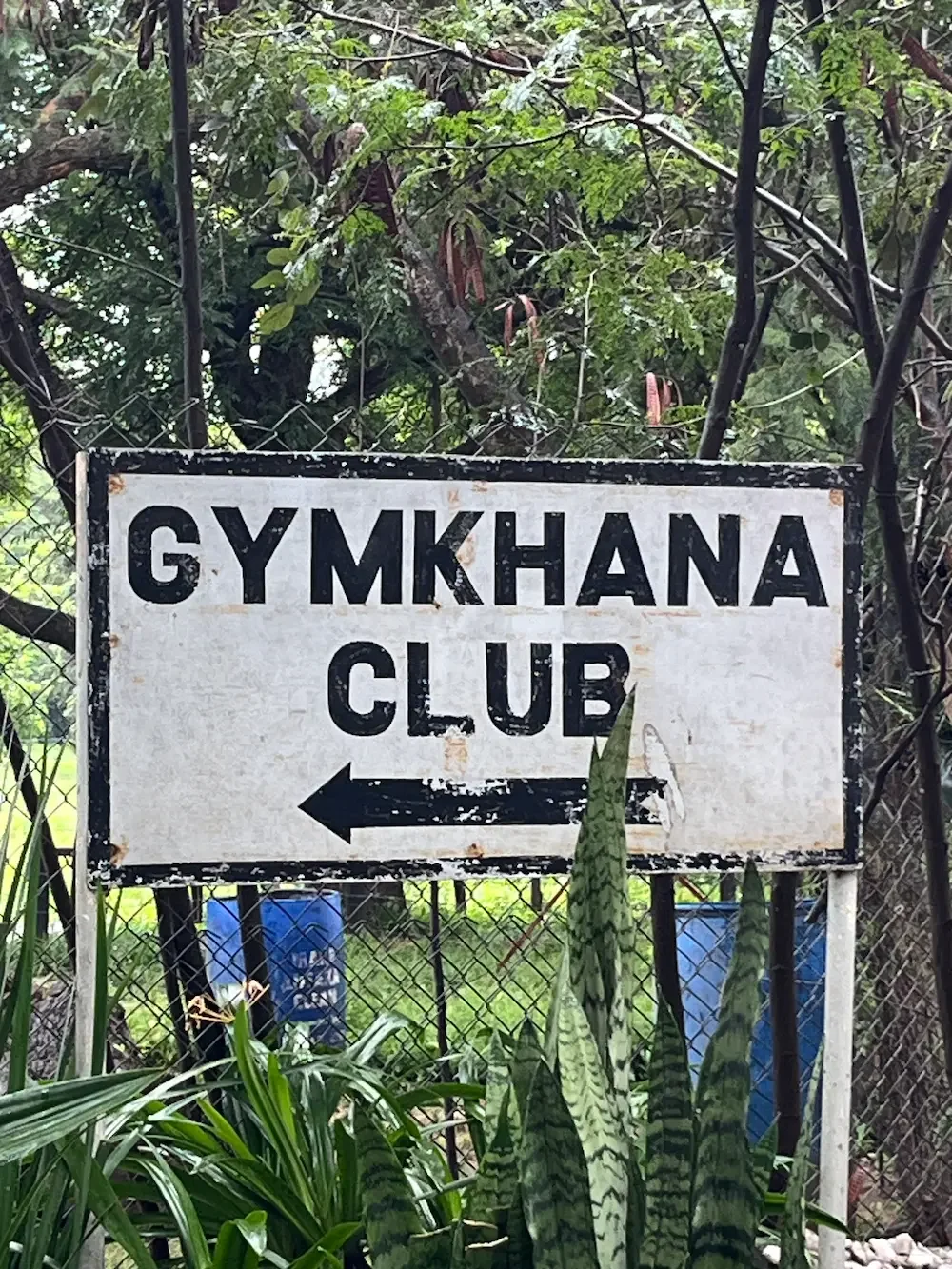
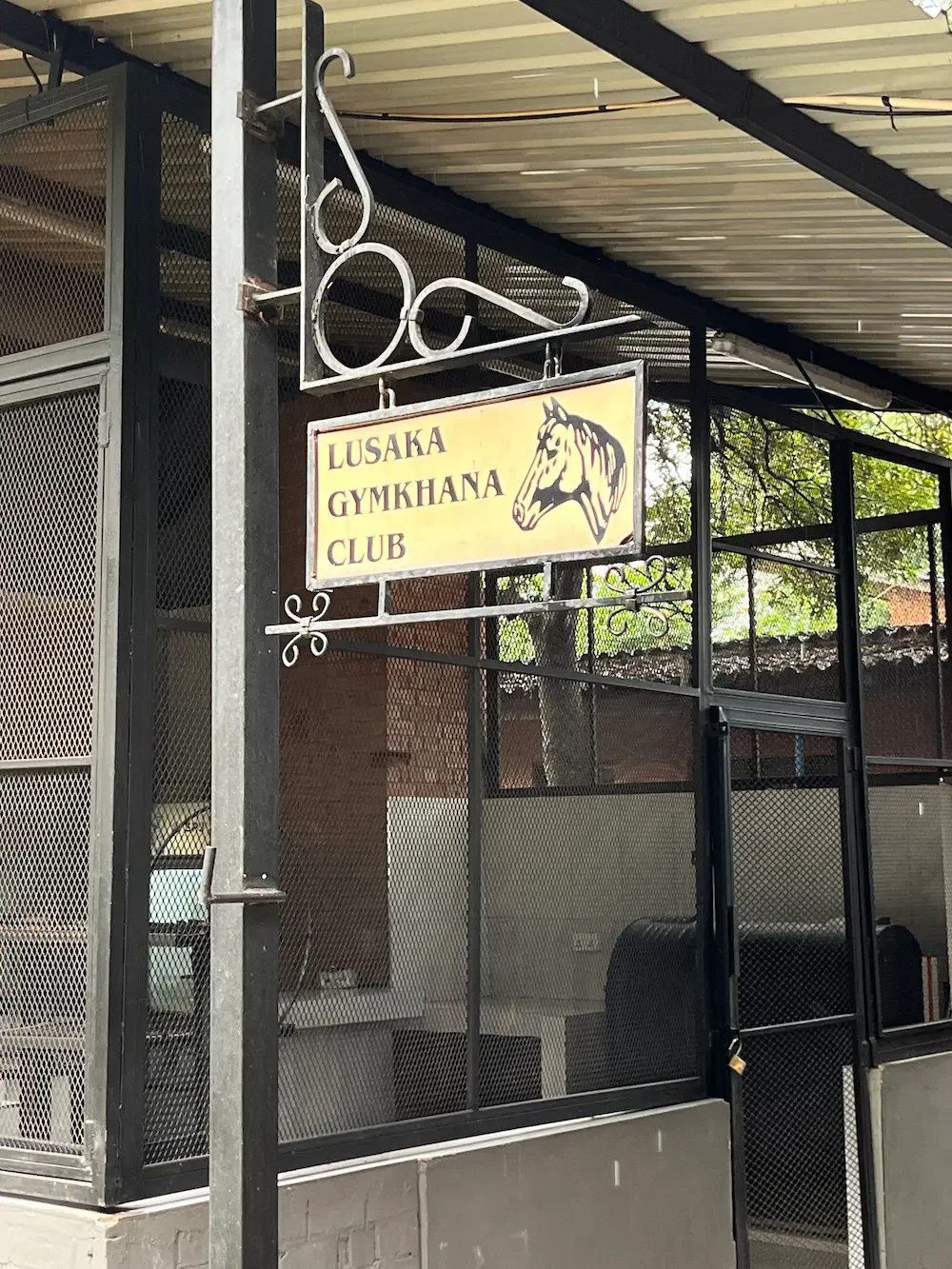
The Gymkhana — whose name comes from the Urdu and Hindi for a public place of athletics, so the word itself has always been a third space — is an equestrian facility. People ride horses here, and jump them. There is also dressage, which is horse riding as a discipline — precise, trained, quietly spectacular if you have never watched it — and which most Lusaka residents have no idea is happening at the Showgrounds on any given weekend. The Lusaka Rugby Club plays here too. More is going on here than most people who drive past every single day have any idea about.
And while we are on the subject of horses: the polo club is right there when you are having dinner at Bellini. You can see it from your table. It is a lovely thing to look at over a meal. But has it ever occurred to you to ask how you actually ride there? How you play? Most people finish their pasta and go home without it crossing their mind. That is exactly the problem this piece is about.
Lusaka Golf Club carries that same quality of a place used for decades by people who genuinely cared about it. Old trophies behind glass. The slight smell of history that well-used rooms develop. Worth walking into, even if you have never held a club in your life.
What most of these places have that a running club in a car park does not is the full picture. You do the sport, and then there is somewhere to go afterwards. A bar, a veranda, a table where you sit with the people you just competed with or against. And crucially, that space belongs to the club. It is yours collectively. Not a café where someone three tables away is on a Zoom call and the barista needs the table back by two. A space that belongs to you changes how you behave in it — how long you stay, how loudly you laugh, how quickly you come back. That combination — the activity, the social space, and the ownership of it — is the whole point of a third space. It was always built in. You just have to show up for both halves.
Also — and this is worth knowing — some employers and industry bodies include club memberships in the benefits package. It sits quietly in your contract, somewhere between the medical aid schedule and the annual leave clause that nobody ever finishes reading. People spend money on gym fees just to be somewhere that is not home, not knowing a bar, a sports ground, and decades of history is already covered. It is in the paperwork. The paperwork you signed.
The Activity Is There. The Infrastructure Is Not.
Look around on any given weekend morning and you will see them: runners by themselves, cyclists navigating the roundabouts, walkers with earphones in. Lusaka moves on foot and on minibuses, and taking care of your health is not reserved for any one kind of person. The running clubs that have emerged deserve credit. The groups showing up at dawn are doing something real. But a running club with a clubhouse is a running club with a reason to stay after the run. The activity is there. The infrastructure — the place to sit down afterwards, the bar, the familiar faces who turn up every week — is what turns a hobby into a community. Right now most groups do the hard part and then scatter. The third space is precisely the part where the scattering stops. Zambians are good at making friends. We just keep doing it in car parks and then going home.
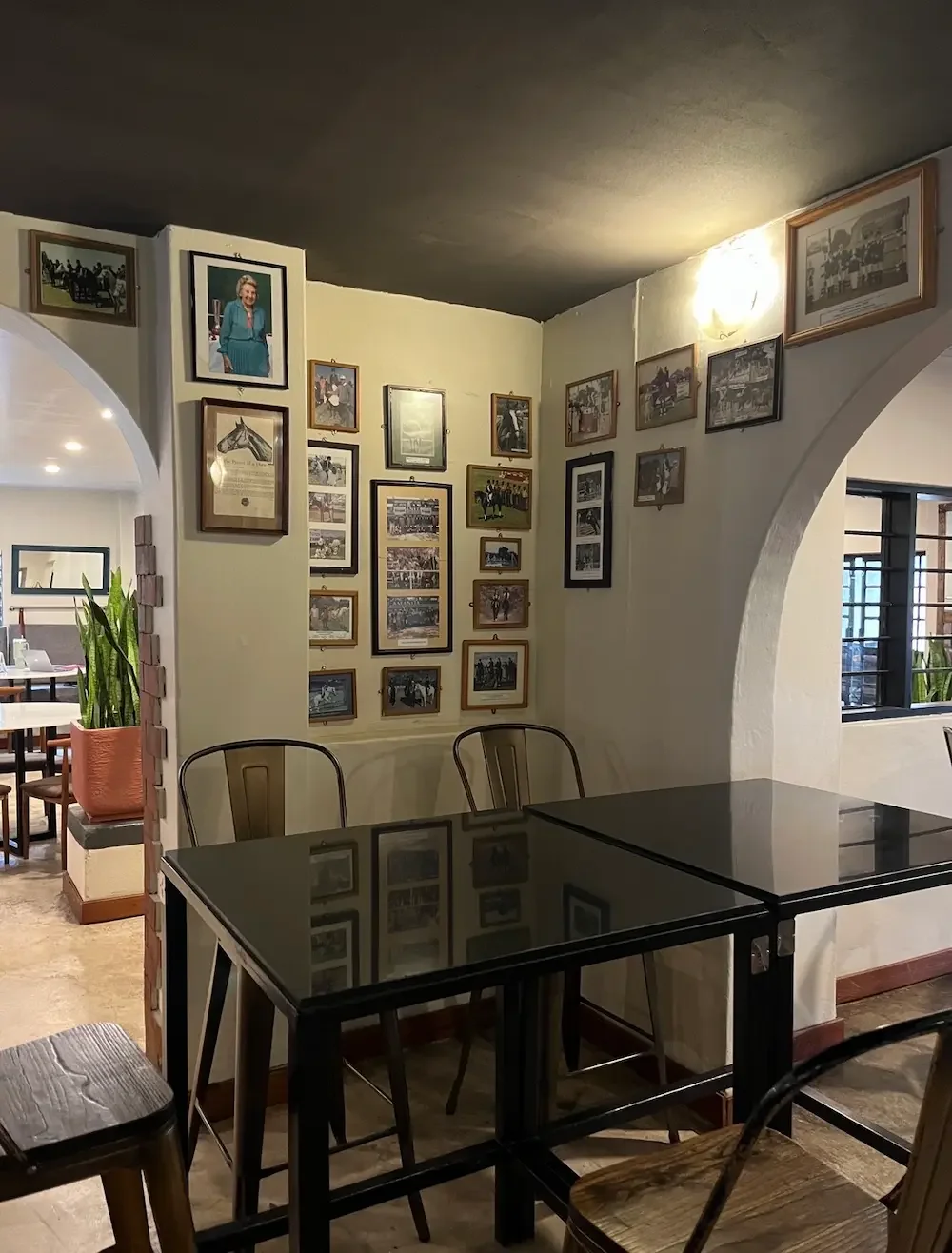
cozy corner with vintage photos stil hanging at the Arena Bistro, Gymkhana Lusaka
Show Up Before the Door Closes
Munis, the cricket club, Lusaka Golf Club, the Lusaka Club, Queensmead, Sunset Stadium, Fallsway Arena, the Gymkhana — all of them still standing, all of them carrying more history than they get credit for. Most will need work. Some need a lot of it. But that is the opportunity too. The next Arena Bistro revamp is waiting to happen somewhere. It could be any of these places, with the right people and a decision to keep the trophies on the wall.
You already know how to make a friend. You do it constantly, in the most unlikely places, with the most unlikely people. You just need somewhere to keep doing it. You are probably in at least one group chat right now that was supposed to be that. It is not. You know it is not.
Show up. Before they turn it into a filling station.
I was getting ready to leave the Gymkhana when I noticed, out on the grounds, that someone was quietly setting up the jumping equipment. The poles, the rails, the standards placed with the particular care of people who have done this many times before. Horse jumping. Still happening here, at a club whose very name means a place where people gather to play. Still being prepared for, still being tended, on a perfectly ordinary afternoon, by people who simply showed up.
That is the whole point.
___
Lusaka365 covers the city as it is and as it could be. To list your club, space, or event, visit lusaka365.co. For what's on this week, check our events calendar.
